The Actuators & Sensors teams build the main working parts of smartwear by placing advanced features directly into textile fibres.
Actuators help clothing provide gentle support or movement assistance when needed. For example, a garment may become firmer to support posture or help someone lift an arm or stand more easily.
Sensors gather information about the body, such as movement, position, or muscle activity. They are designed to work quietly and comfortably without getting in the way.
These systems must be flexible, lightweight, and suitable for clothing production. When sensors and actuators work together, smartwear can respond to the wearer in helpful ways.The Actuators domain is led by Dr. Dan Sameoto. The Sensors domain is led by Dr. Anastasia Elias. Their teams include specialists in materials science, robotics, and wearable technology.
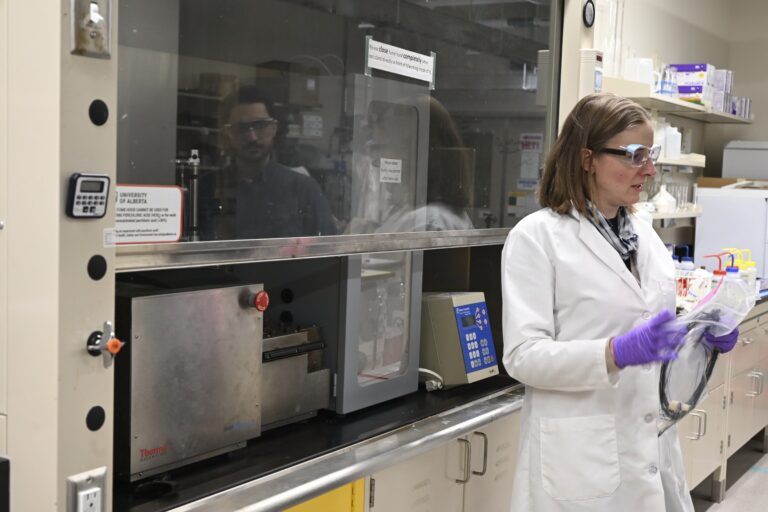
Anastasia Elias in her lab.
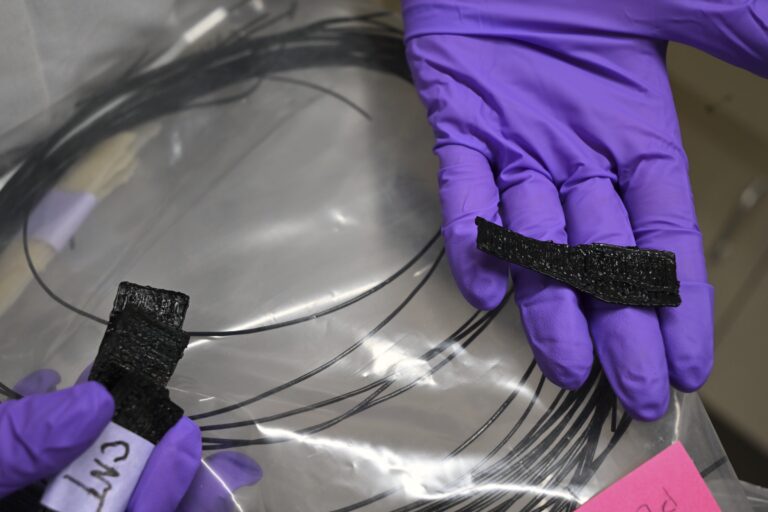
Carbon nanotube (CNT) composite samples.
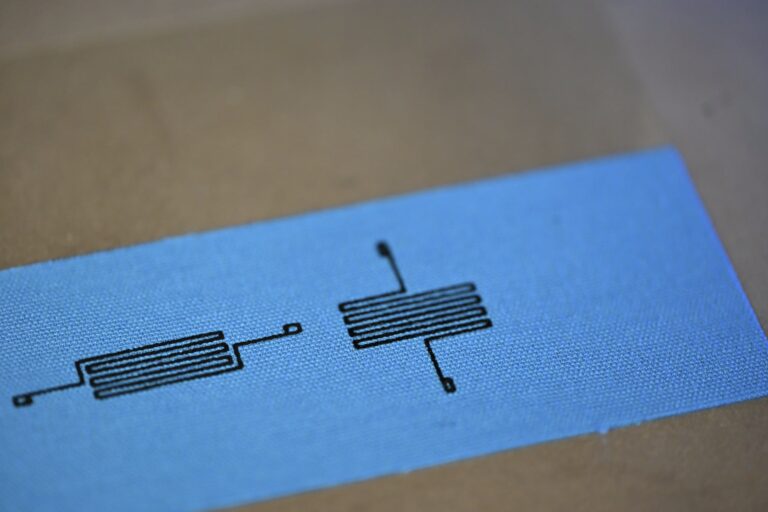
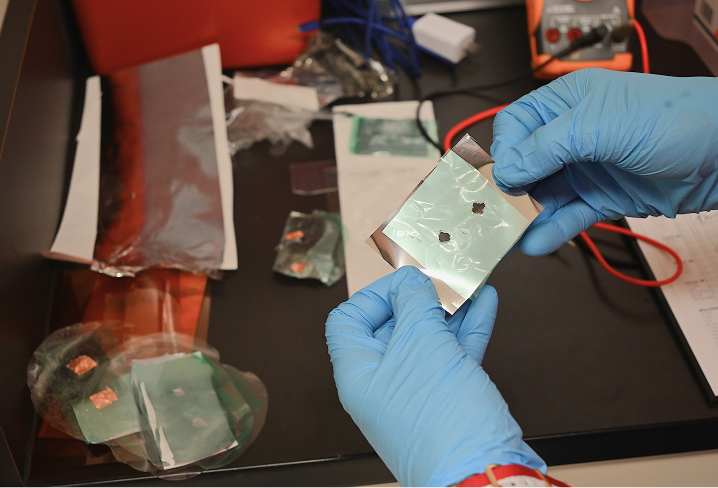
A flexible sensor printed directly onto textile fabric.
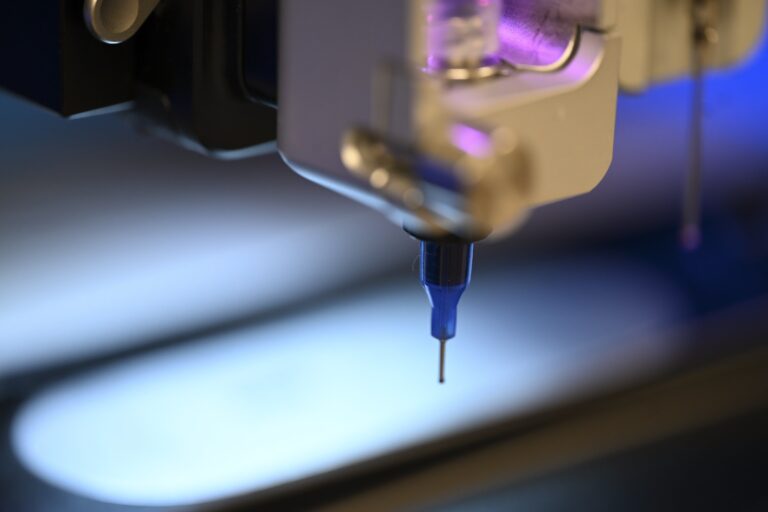
A precision dispensing printer used to print conductive patterns for sensors.
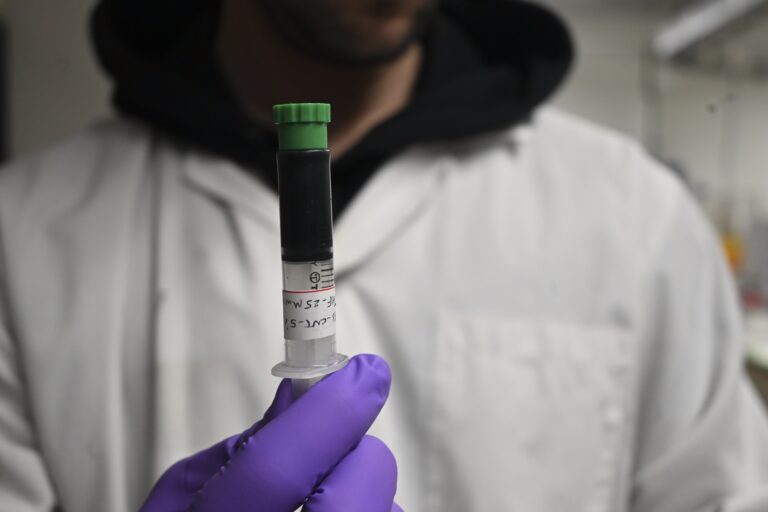
Carbon nanotube ink prepared for sensor fabrication.
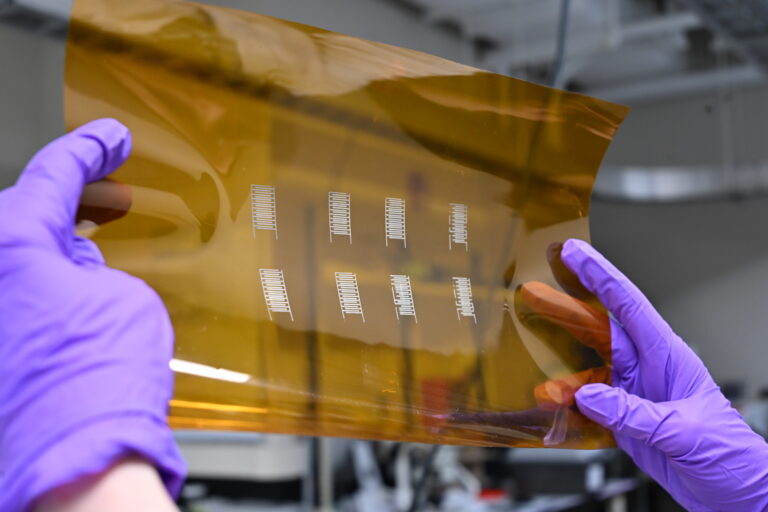
Flexible sensor circuits printed on a polyimide film.
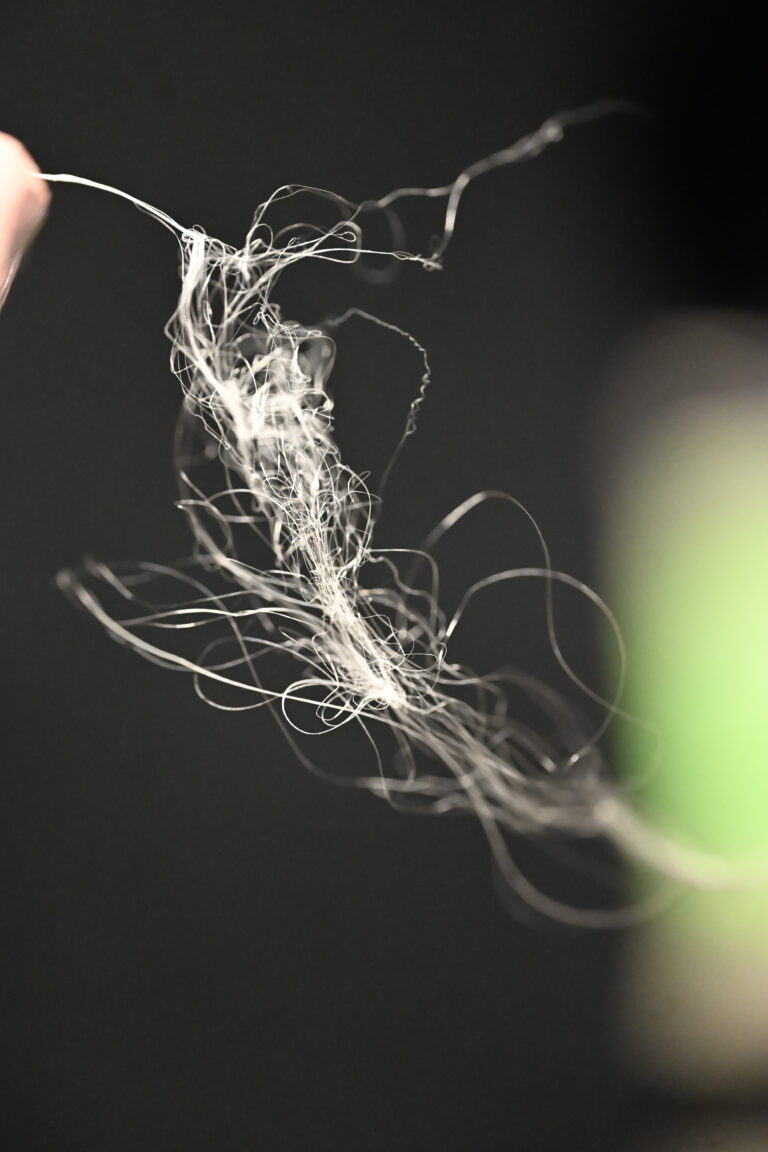
Coiled polymer fibers.
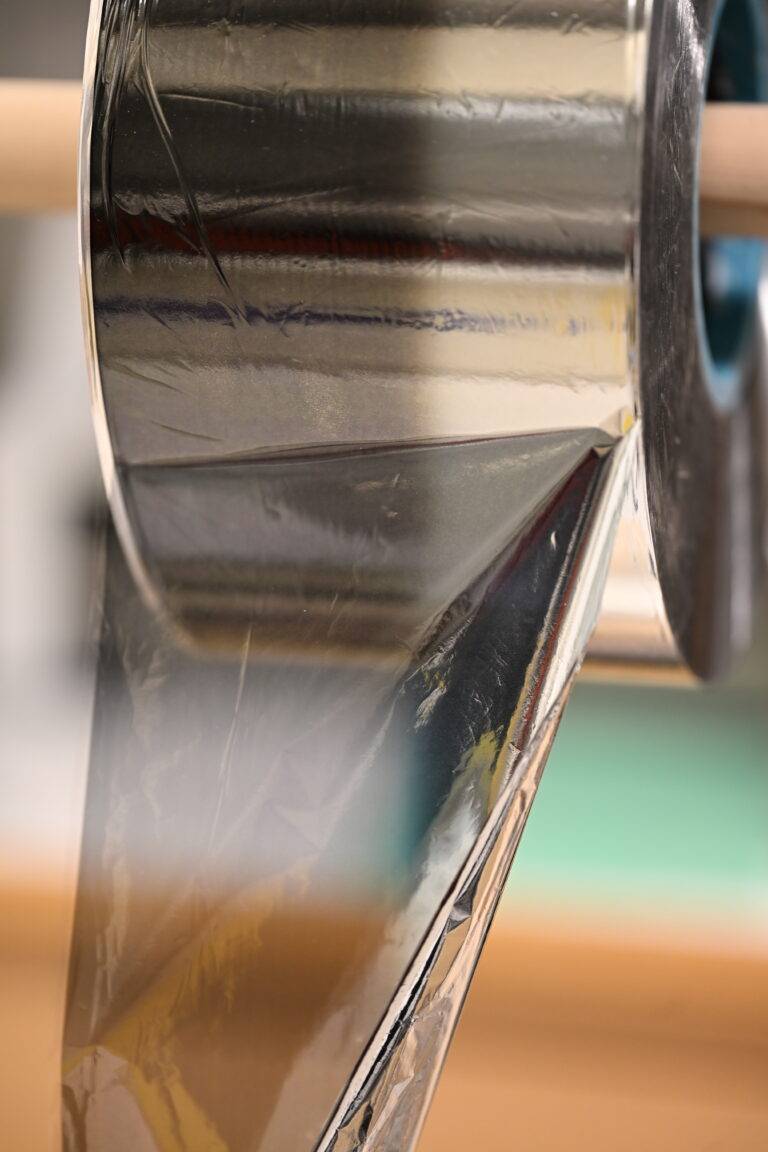
Shape-memory alloy ribbon.
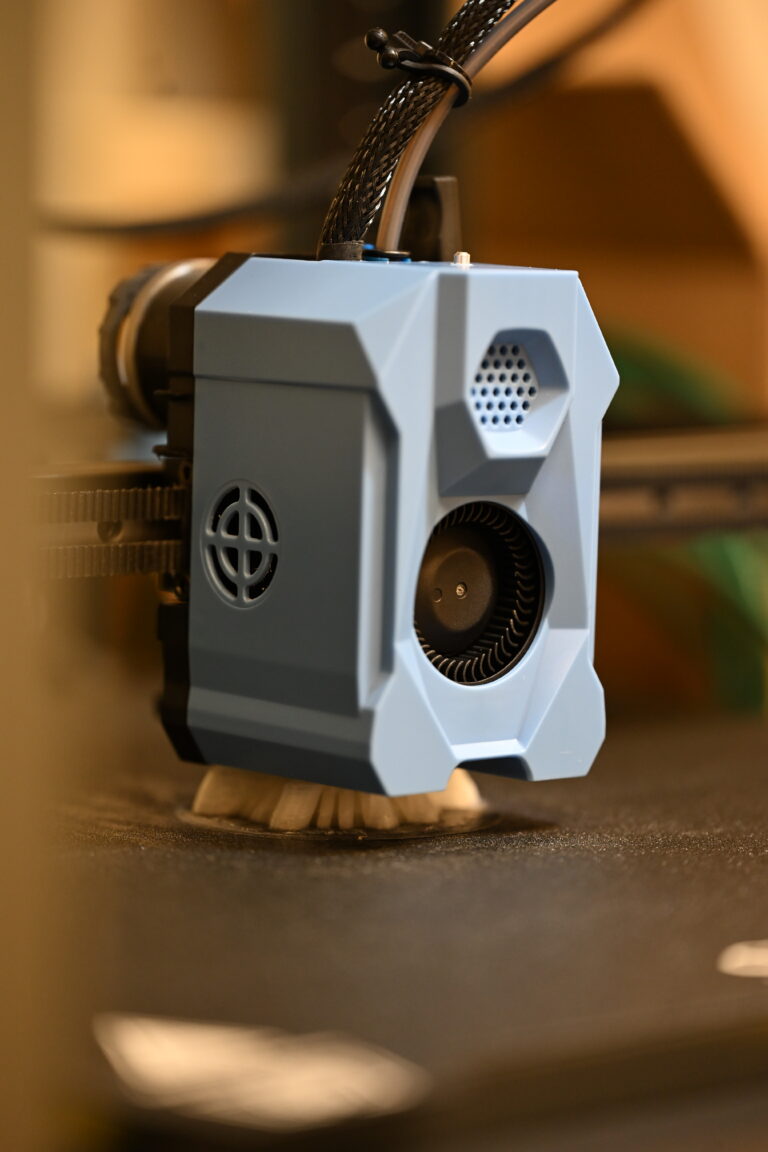
A 3D printer used to fabricate actuator components.
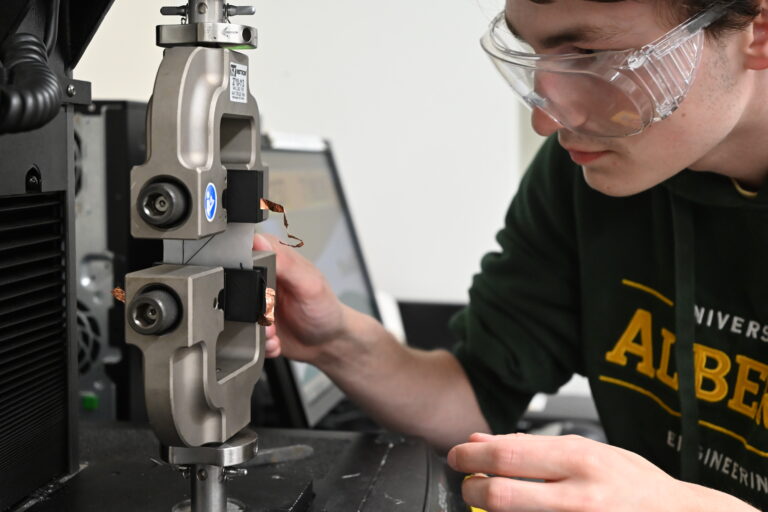
Testing set-up of the multidirectional strain sensor using an Instron brand Universal Testing Machine.
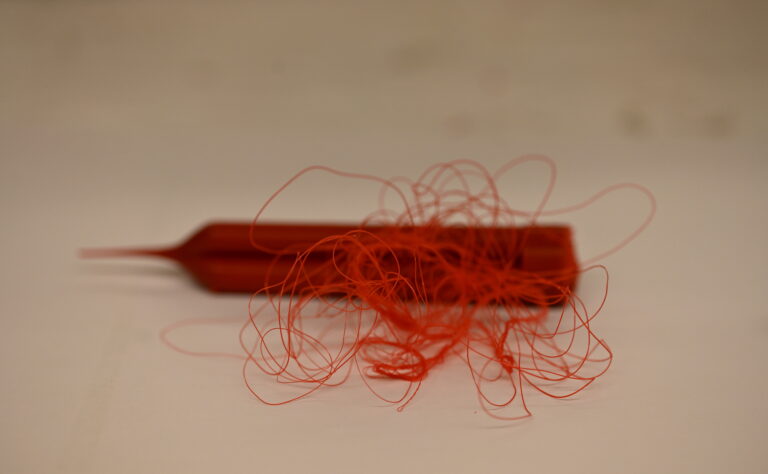
Thermally drawn multi-channel preform of PEBA.
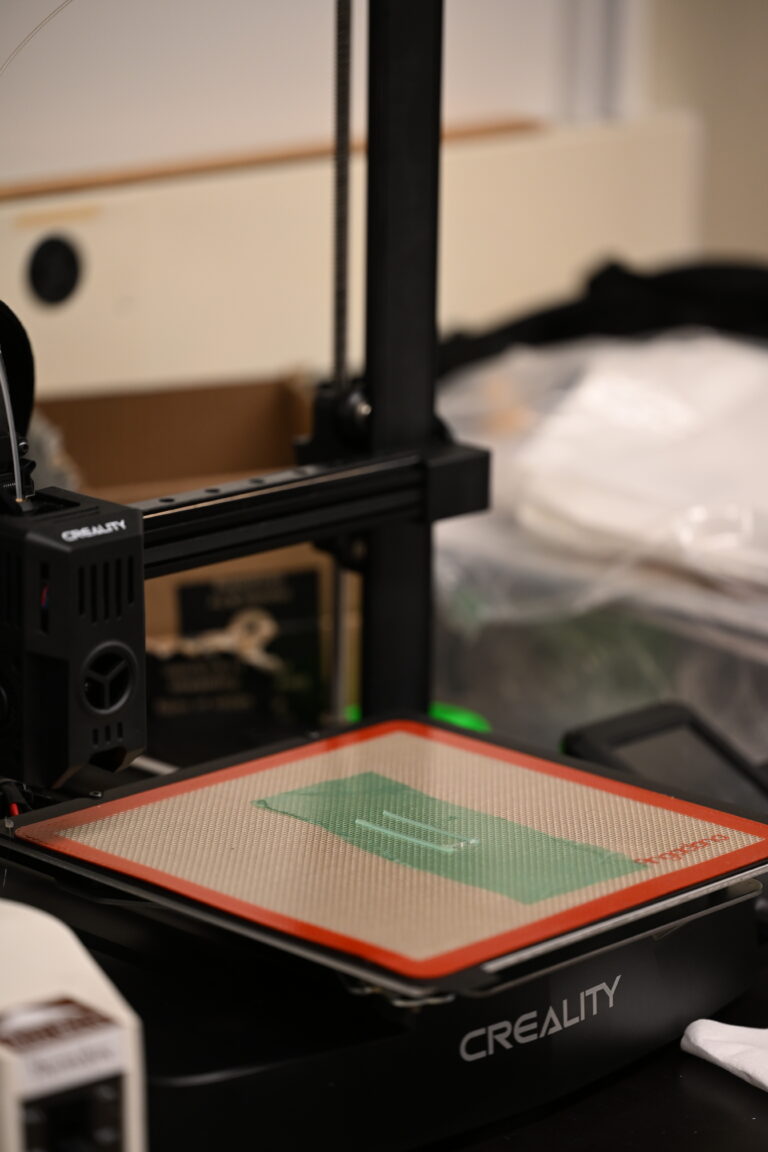
Repurposed 3D printer for thermally welding pouches of polyurethane.
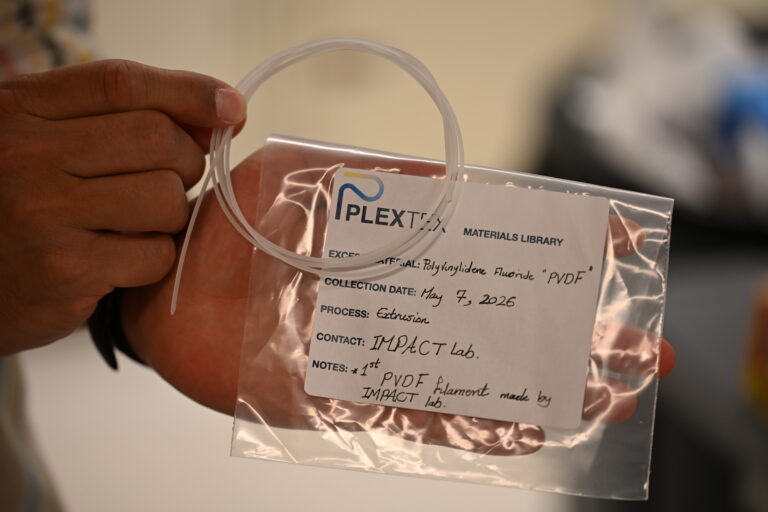
PVDF filament extruded by a Wellzoom system for 3D printing tests.
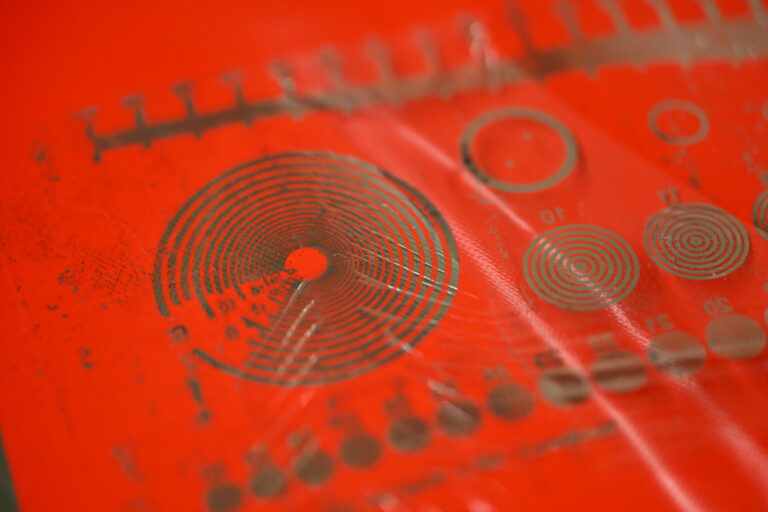
Patterned metal traces on PP film.
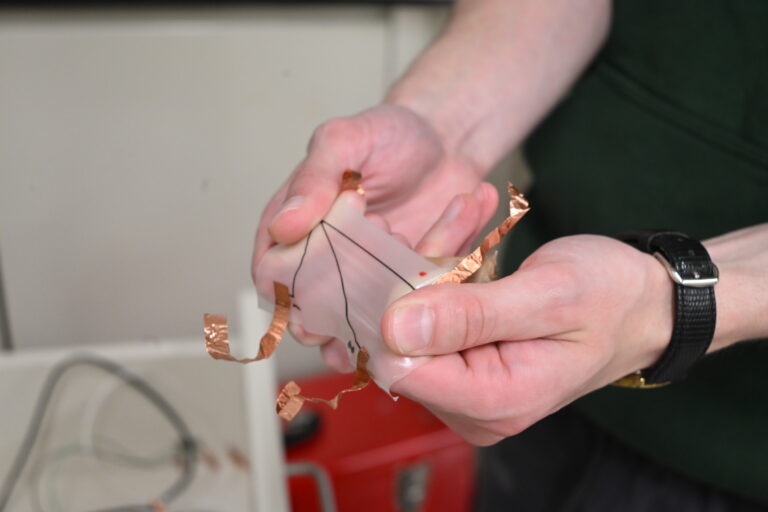
Multidirectional piezoresistive strain sensor being stretched by hand.
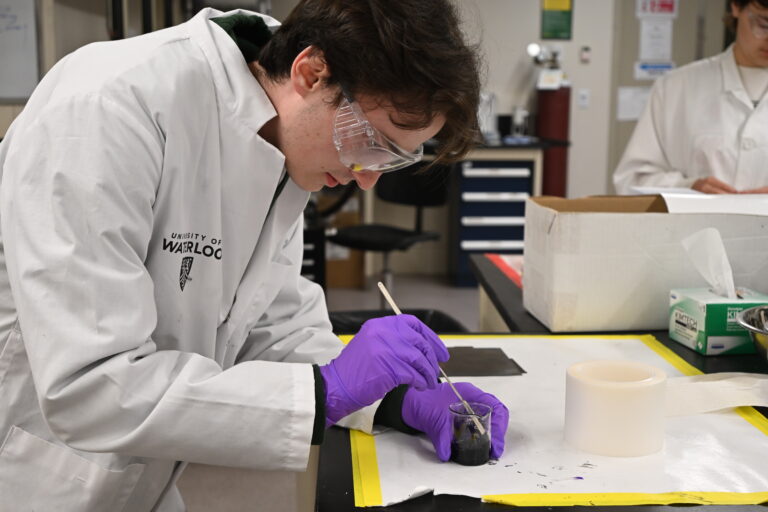
Stretchable piezoresistive ink being stirred by the summer student, Cameron Keisig. All photos: Aynaz Raoufian